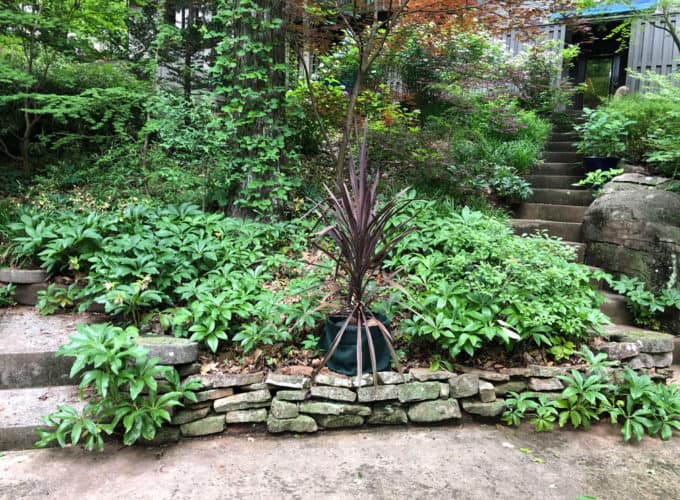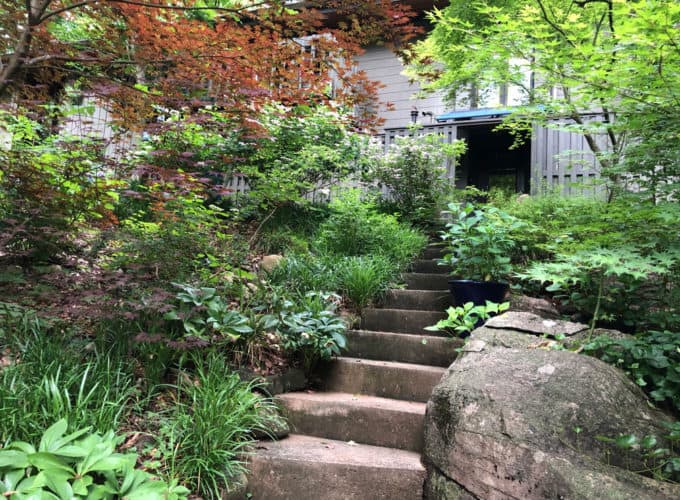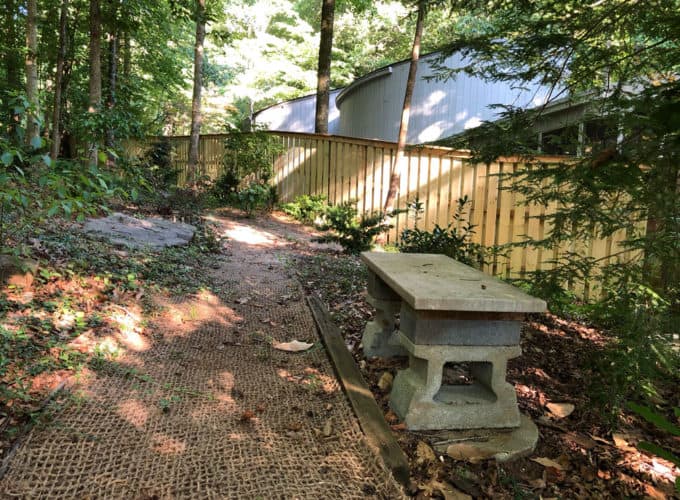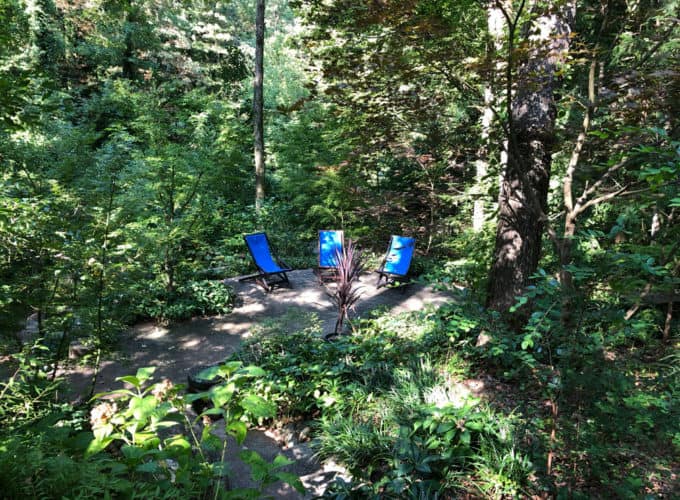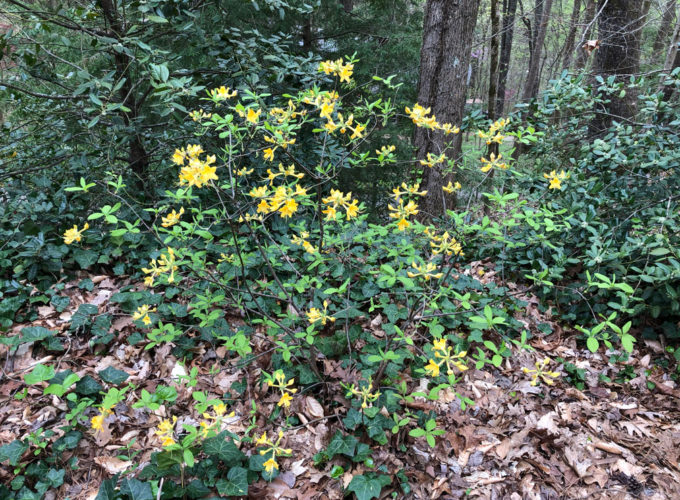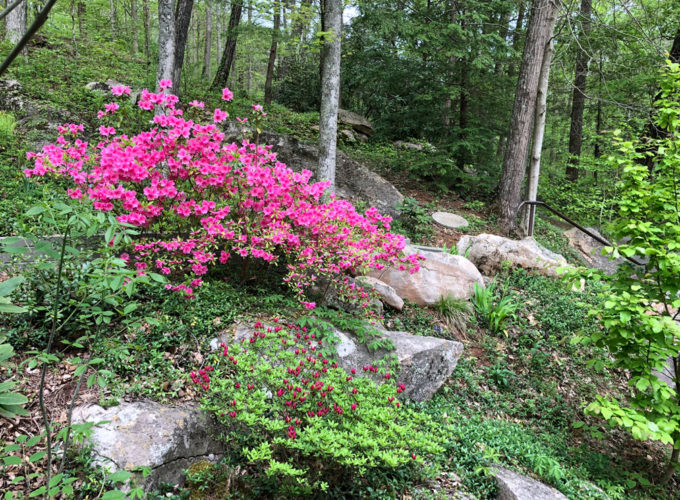
Apologies to all of you—friends and family—for not being more responsive to your queries recently. All of my devices chose to die a couple weeks ago: a heavily used MacBook Pro, ancient iPhone, and redoubtable Ring. I’ve finally got them all more or less limping along, but they all need to be upgraded or replaced. Since I want to travel for the next few years anyway, I may simply go to burner phones—a lot cheaper and no junk or spam!

All part of crazy times: Water line/plumbing ruptures, tree falls, and roofing damage on utility sheds from three (last night a fourth) back-to-back climate-change storms in three weeks. When I stopped screaming about the resulting chaos in my home and garden, I realized that it was truly wonderful not to get phone calls, emails and alerts—thinking back to how our family’s 17th century New France pioneers lived much longer, healthier lives under very challenging conditions than many in more modern times.

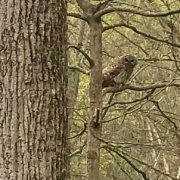
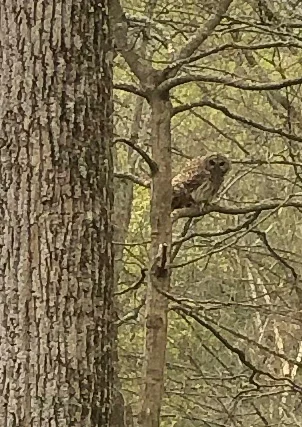
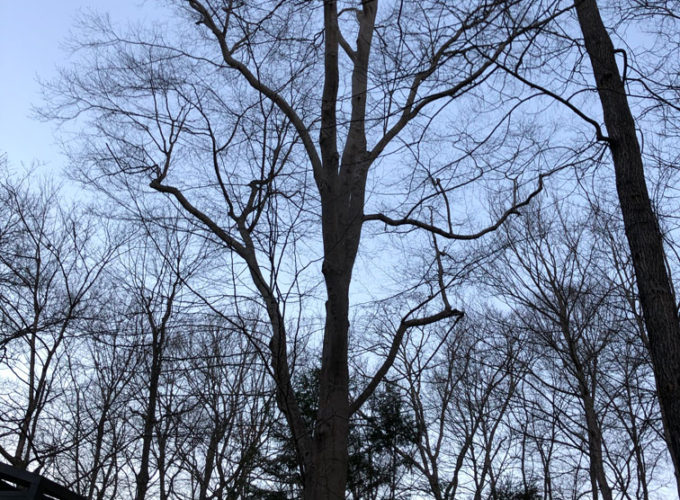
The owls are back on their nest, unfazed by the loss of a major limb on their giant beech tree last week in one of the storms. I happened to see MaOwl come out briefly from her nest to check the damage up high, and the fallen limb on the ground, and then turn right around and nonchalantly go back in, somehow reassured the loss was not too devastating.
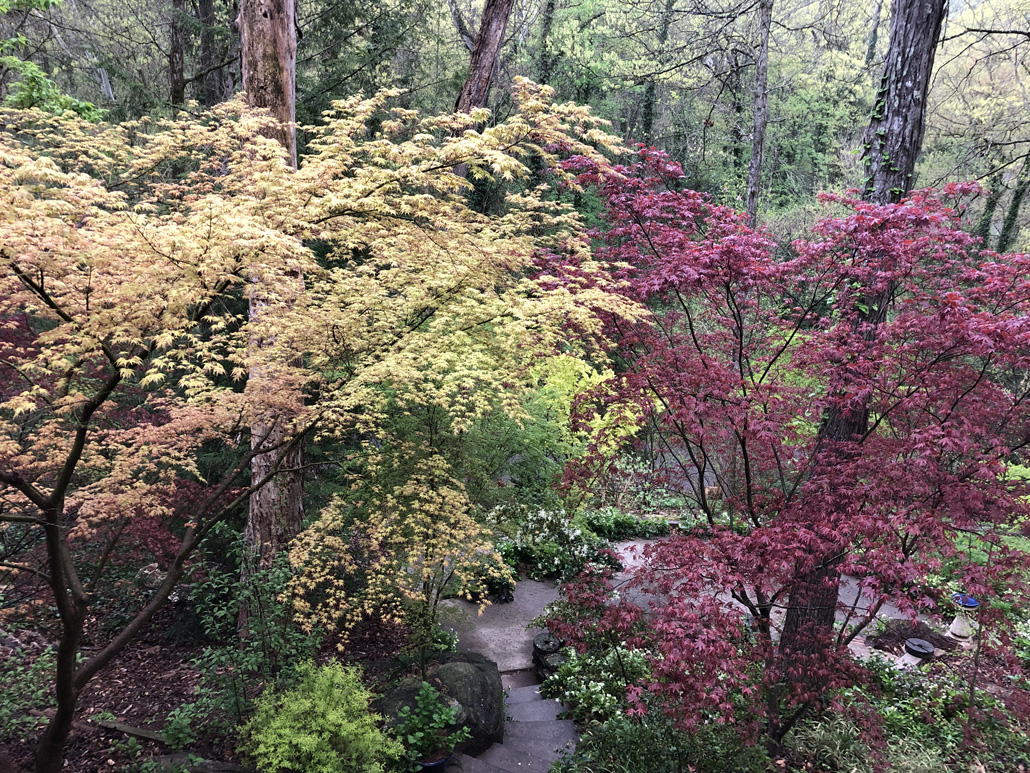
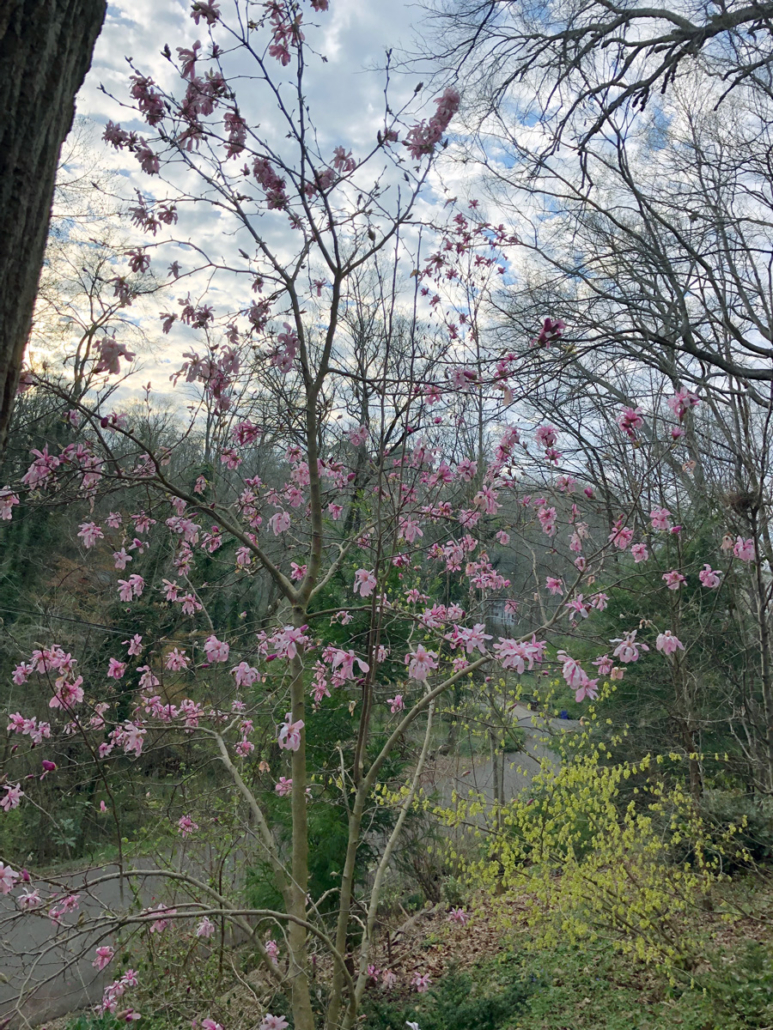
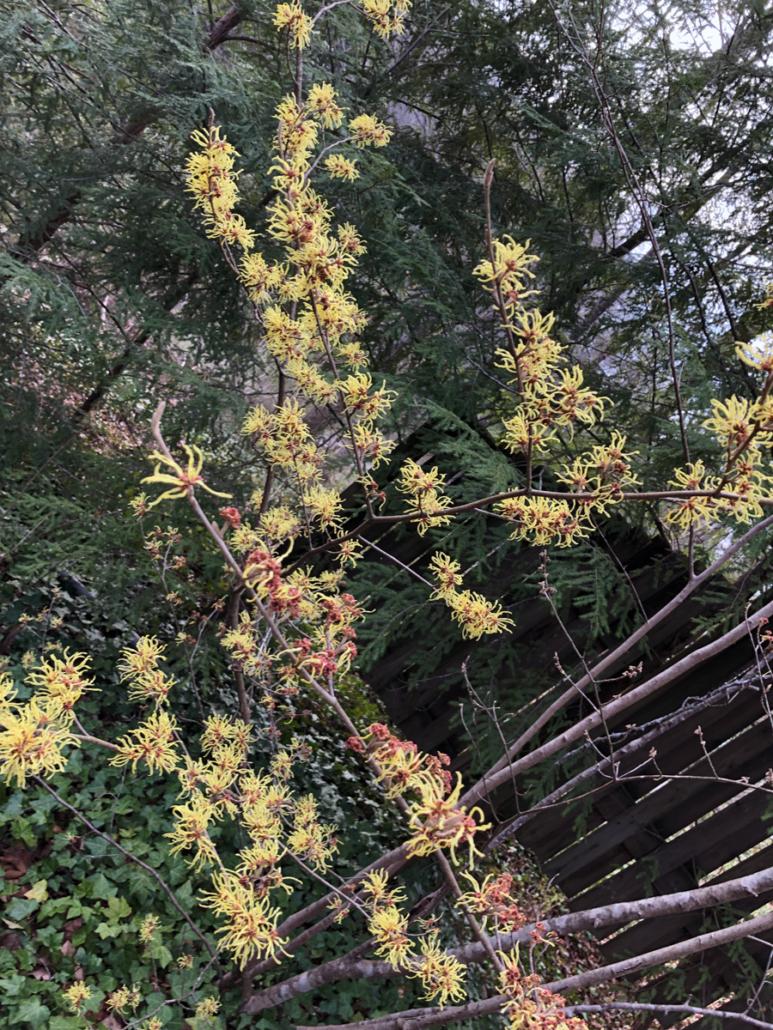
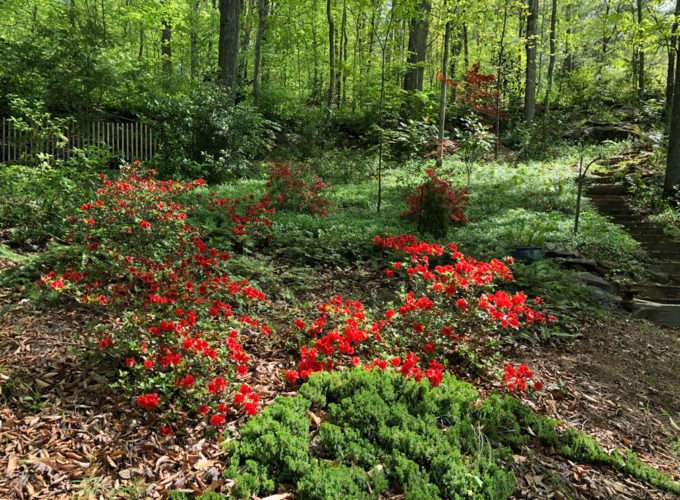
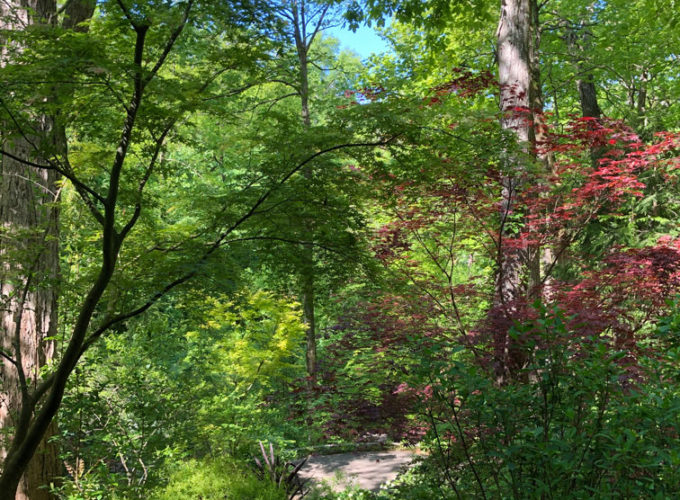
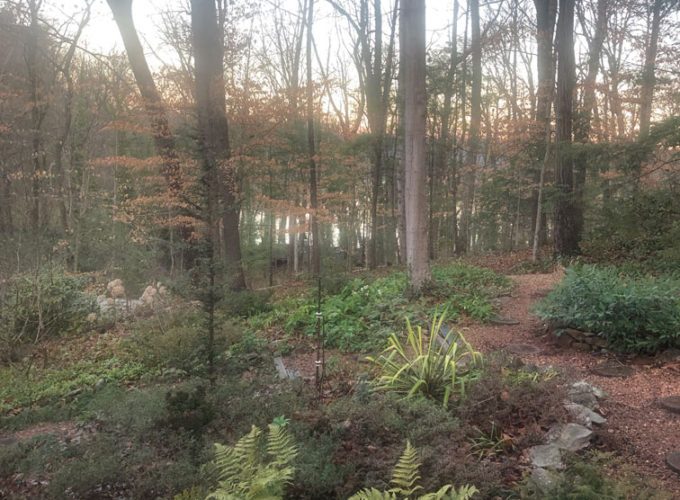
Miraculously, after all the disruption of storms and damage from freakish gusts, glorious springtime has also arrived here. One of the best young guests I have ever had is in residence until 1 May. He has finished his doctorate in Pharmacy and is studying for his boards. All day long, he takes breaks and goes out in the garden to walk and clear his head. At least once a week, he sees me out and thanks me for the nature here—I tell him I just tend it, and not very well at that. I overhear him sometimes speaking with his mother on his phone about a plant or letting her listen to a bird call. Very few guests do any of that. Most pull all the drapes closed as soon as they arrive and never look outdoors or walk any further than to their car—with huge televisions like trophy fish they bring in the back seats of their cars, and devices always at hand and in their ears and faces. My current guest will be an exceptionally observant pharmacist, that’s for sure.

I’ve also recently interviewed students for an internship program the University is sponsoring here at Blue Note Garden on natural and ecological gardening. I won’t know what to do with a trained horticulturist on hand. A strong young woman in her senior year seems the best of the applicants so far; she will start in August, if all goes to plan. I think she will be a joy to work with, lodging also in one of the apartments for the school year.

Smoky Mountain Grace (Gracie) will always be with me on travels this summer. On our way to stay with friends, we will detour a bit to get a week of service animal training at an upstate New York monastery since my hearing has become quite bad and hearing aids have proven inadequate and unaffordable. (Thankfully, 18-year-old Coco has a pet sitter in Knoxville she knows well and likes but it still pains me to leave her for long.) We will also join planned protests all the way up north and back south. Third Act is a age 60+ organization, the thinking being that the MAGA white nationalists won’t attack a whole bunch of older people at the same time! (Knoxville’s first Hands Off event will be this Saturday at 2pm downtown.)

My youngest sister is my Executor and she has agreed to assist me with paying urgent bills on the home front from a joint account. She is the only one I’ll try to keep informed, although I will be trying to send lots of postcards. Imagine that: Words on paper with pictures and delivered in the post, unless it is also done away with. Several of you send postcards to me as you travel and I enjoy them very much.

Recently, I had a meeting with a friend and financial advisor who is the son of our longtime financial advisor from the time of the sale of Lanntair Farm. Kenneth and I had always thought of the son as, essentially, a rich young playboy. Well, it turns out he has also become a mature, wise man who asked me: “What do you want to do for your own health and happiness in this beautiful world and too-short life.” I responded: “Wow, I’ve never even thought about living for my own health and happiness.” He said, “Theresa, it’s about time. Let everything else go.”

Done. So now: Call to action!

Theresa, Gracie and Coco Chanel
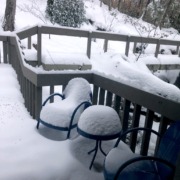
Not since the Blizzard of ’93—15” snowfall and down to minus 12 degrees F—have we seen such snow pile up in a single day. We were at Lanntair Farm then and recorded 16” and minus 20 degrees F. Hauling water to six horses for several days at that time convinced us to add supply lines and a water heater up at the main barn the following spring.

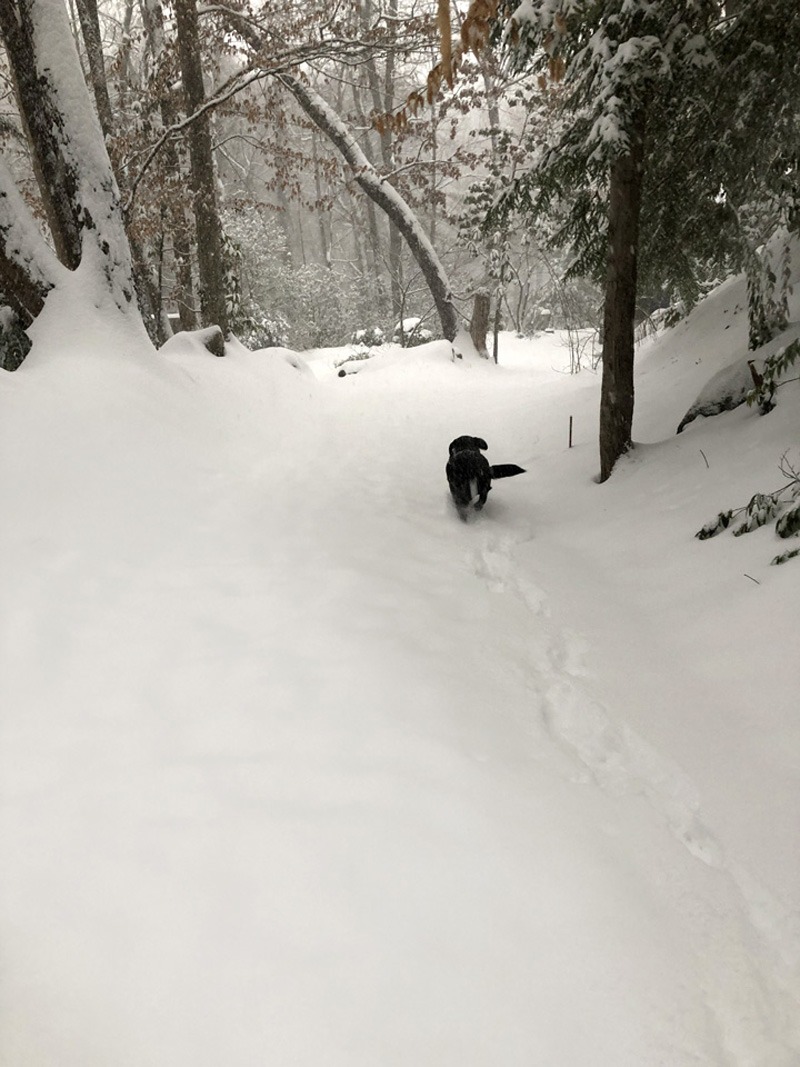
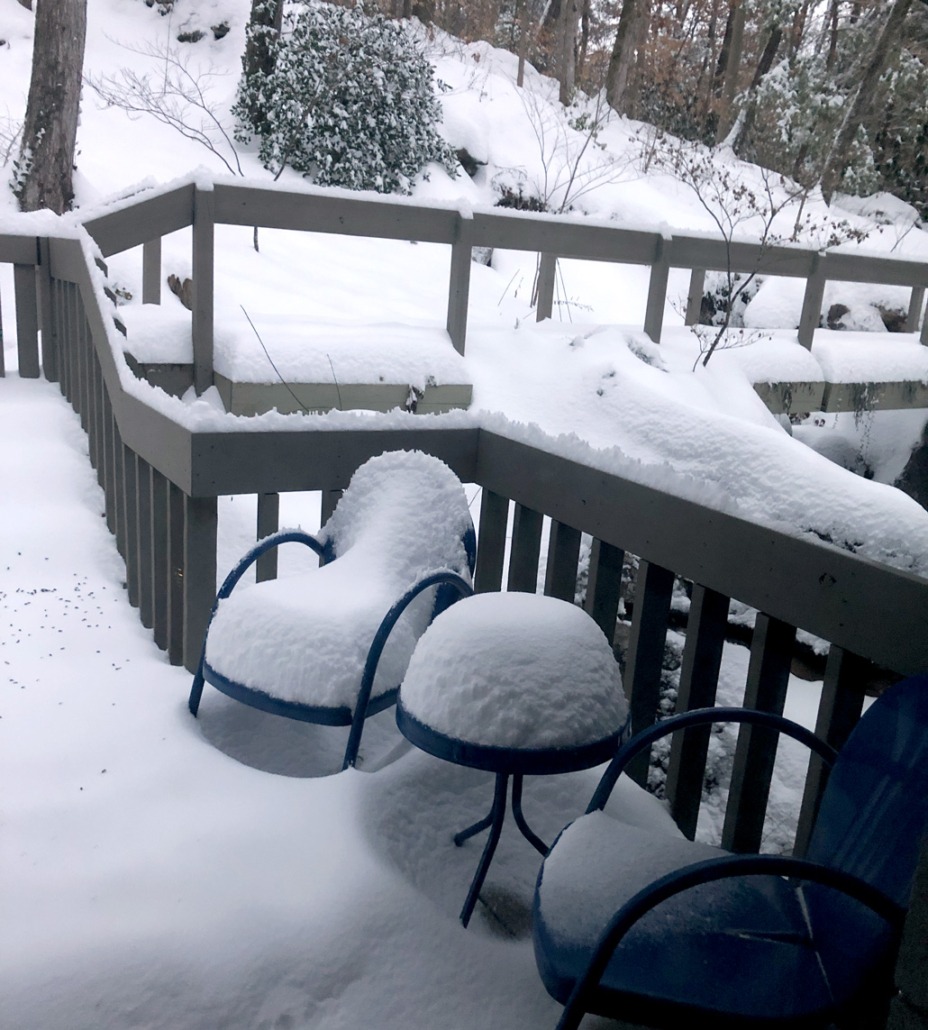
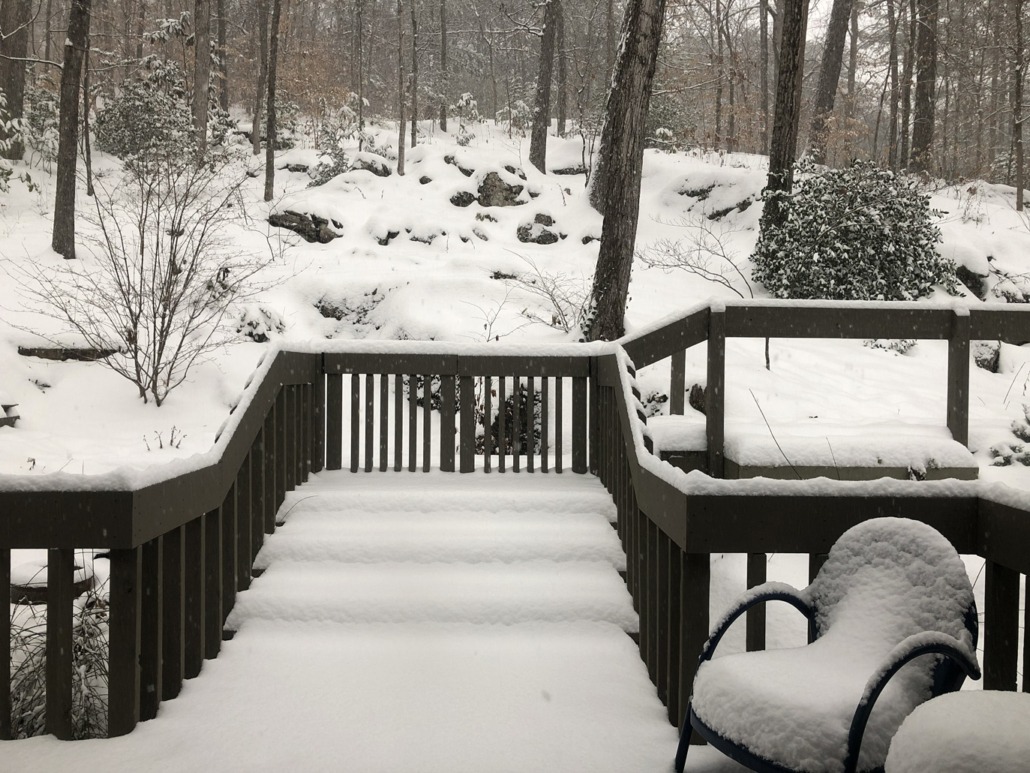
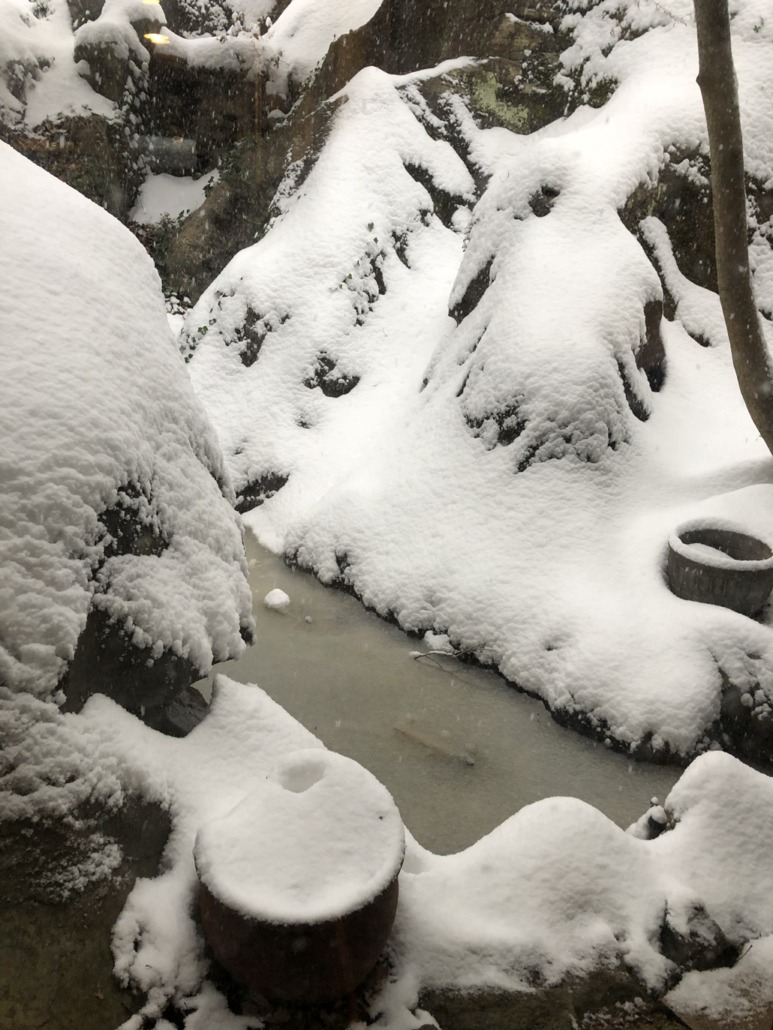
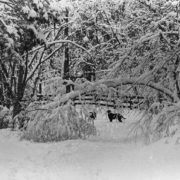
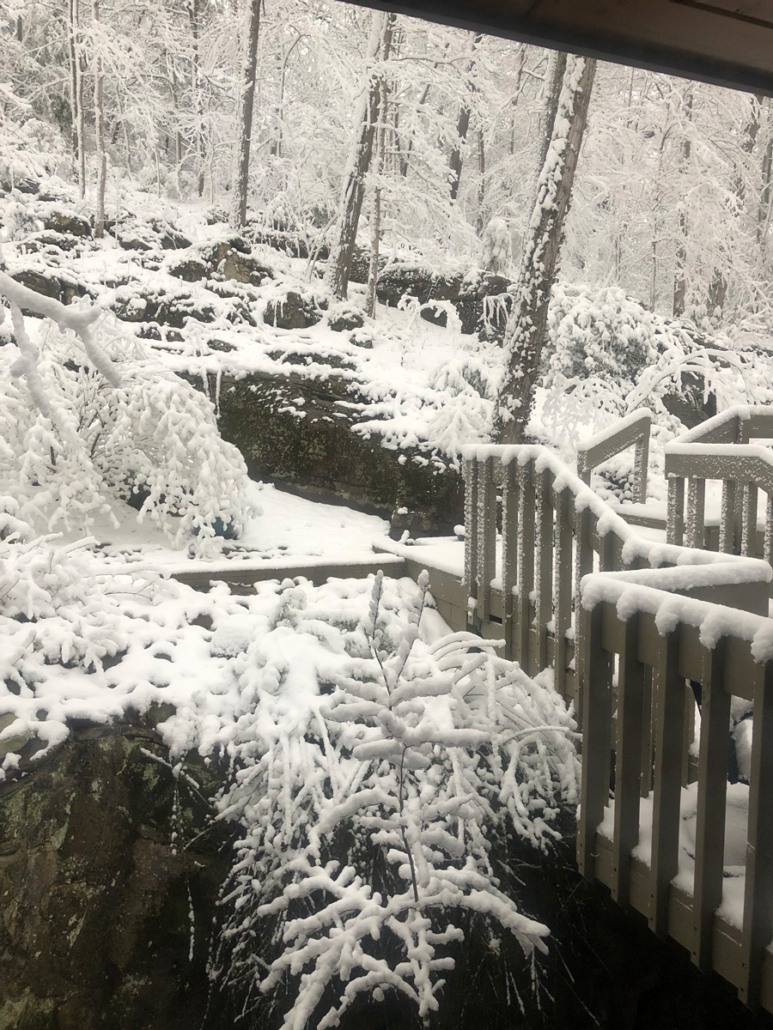
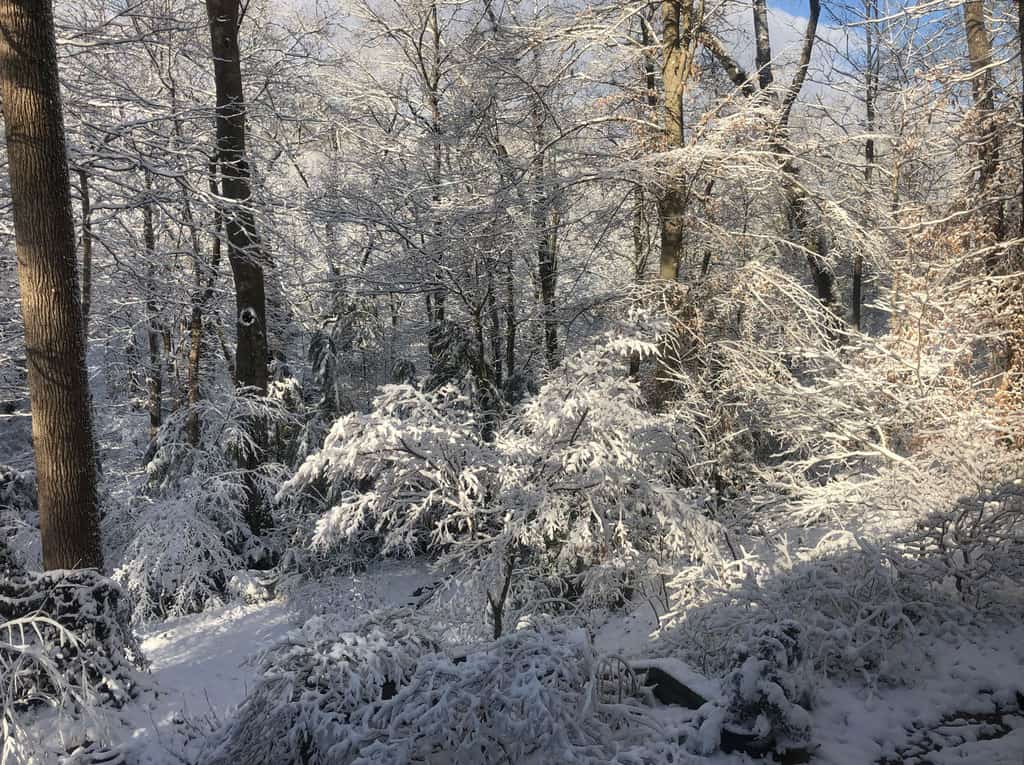
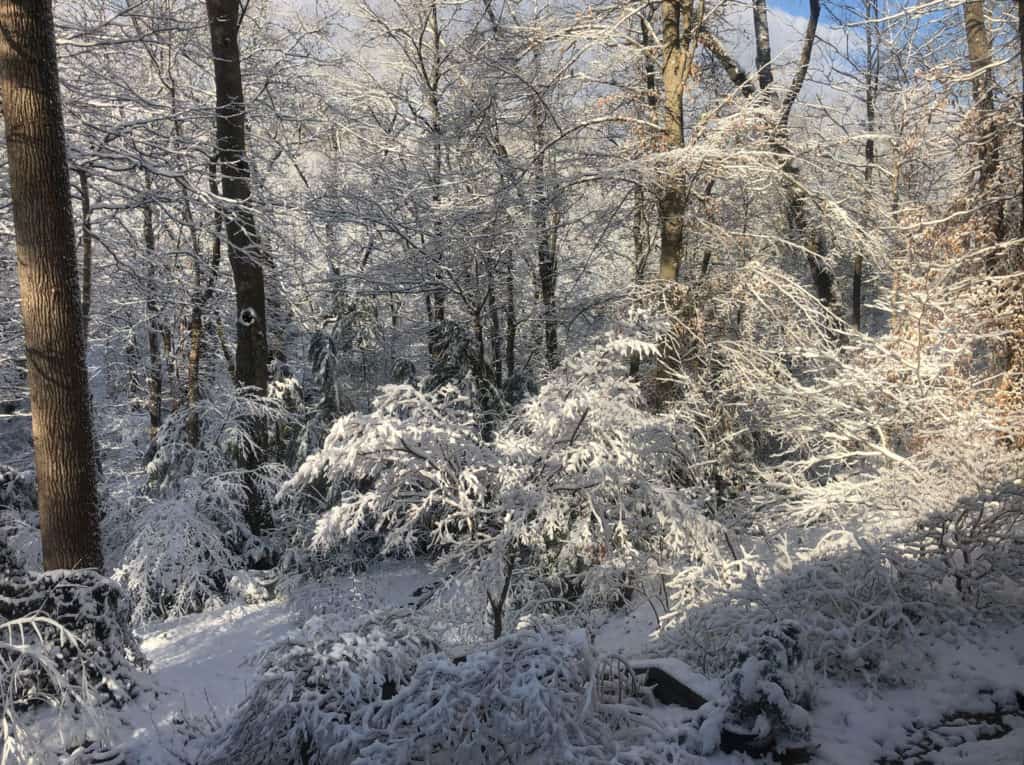
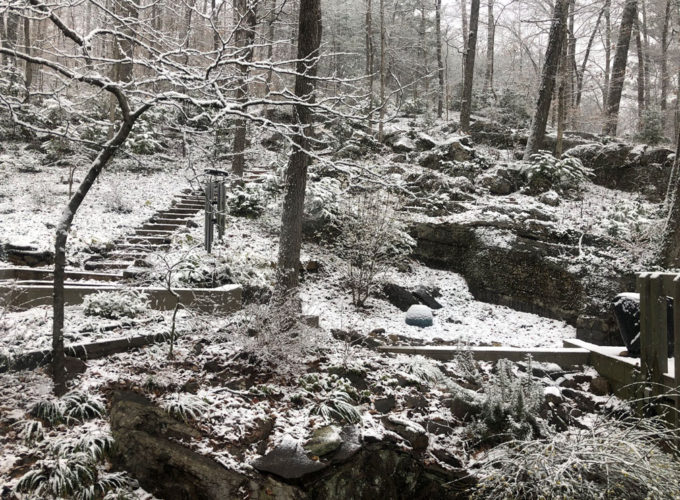
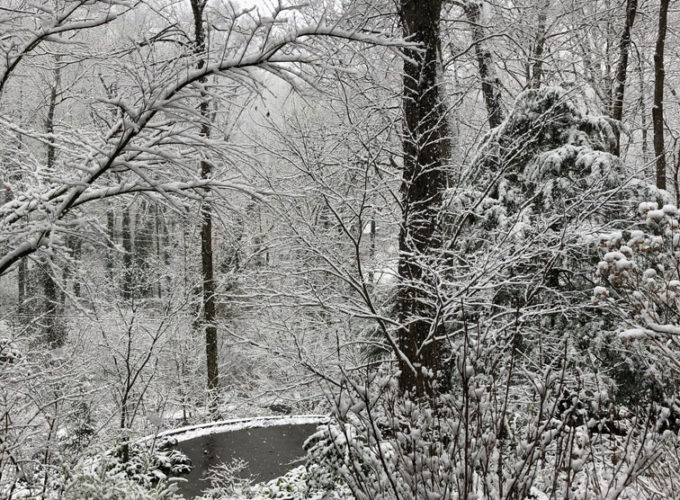
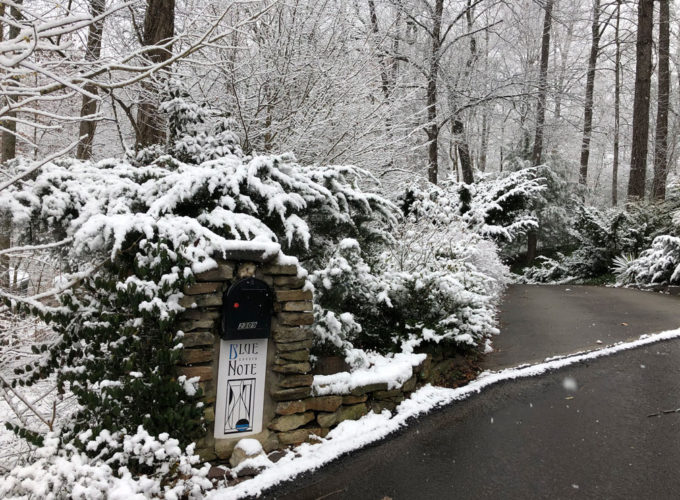
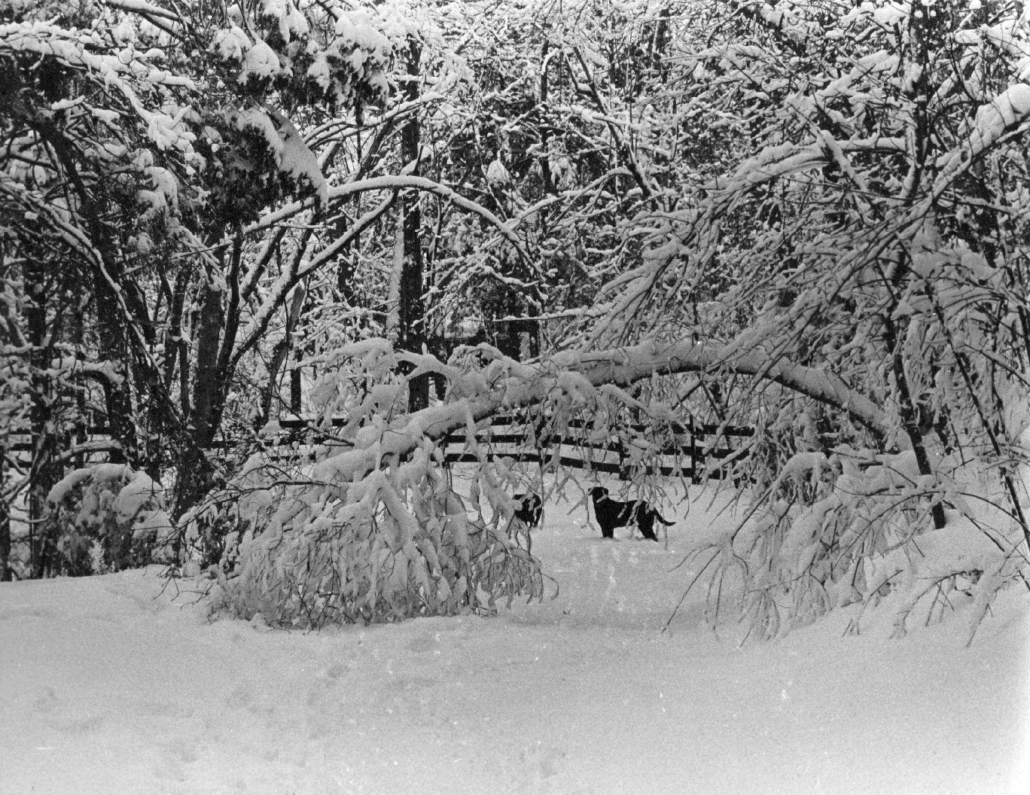
Beginning at 1am on January 15, 2024, East Tennessee experienced wide variation in accumulations, with 12 inches here at Blue Note Garden and deeper drifts around the many large trees in our woodland garden. It was a big, beautiful, powdery snow that fell slow and steady over the course of 24 hours and then hung around on the ground for a long time afterward with temperatures that never reached above freezing. (As of January 19, the 12 inches is still on the ground, and it is now snowing, again. Has Nature mistaken us for Buffalo?)

Prior notice has been excellent from the authorities; streets and dangerous intersections were salted ahead of time. People were able to get in and out of grocery stores with essentials. Closures were announced in good order, taking many vehicles off the roads and reducing accidents to a minimum. There were relatively few power interruptions. Options for online coursework and remotely working from home are much expanded from previous, pre-pandemic shutdowns during storms.

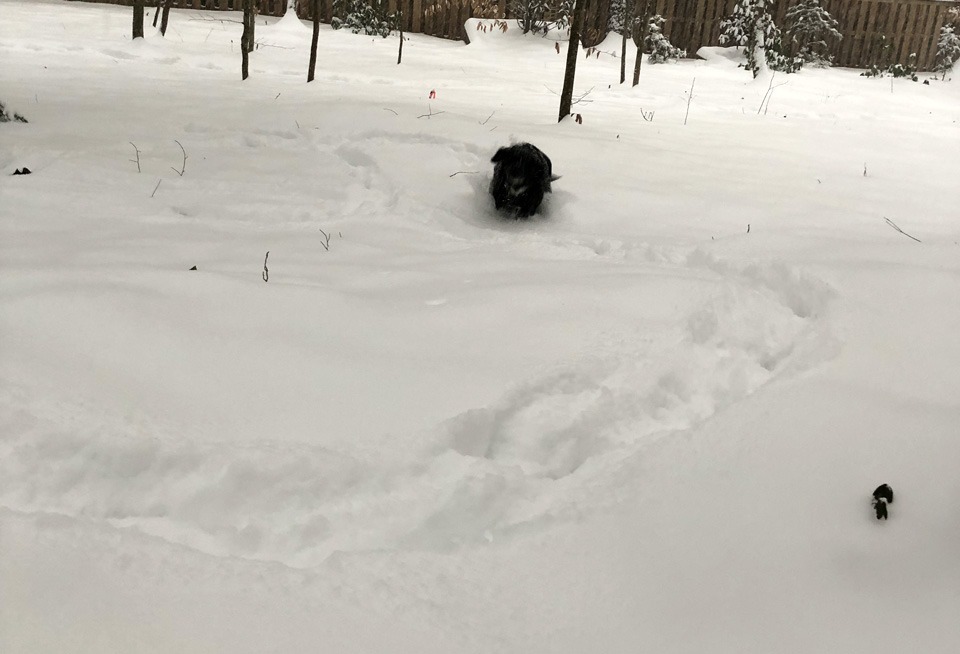
When she goes out early in the morning to attend to her toilette, Gracie, who has become addicted to beechnuts shed by our numerous beech trees, is horrified to find that all of them have been buried. It doesn’t take her long before she is industriously digging for them, and then not much longer for her to realize the situation is pretty hopeless. Oh, well, thank God for kibble indoors as backup!

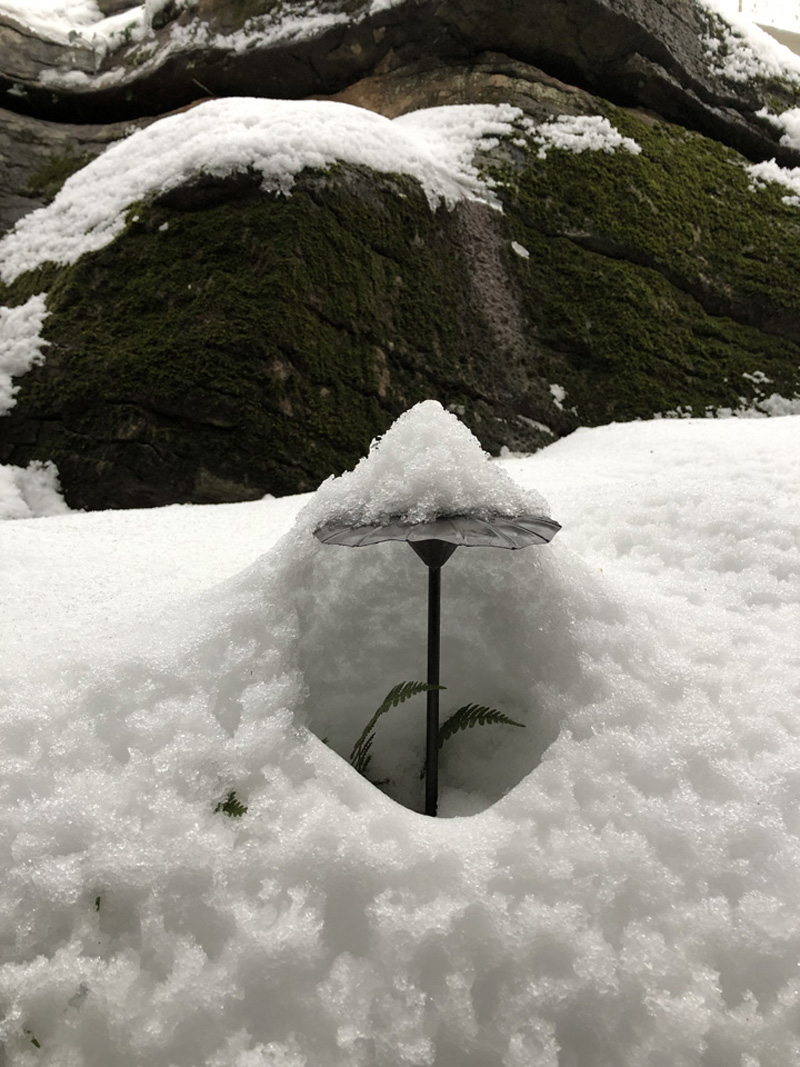
The snow distorts scale and draws attention to delicately dusted features, like a tiny (buried) Buddha sheltered from the snow by a copper umbrella and a couple of emergent fern fronds—its own kind of temple:

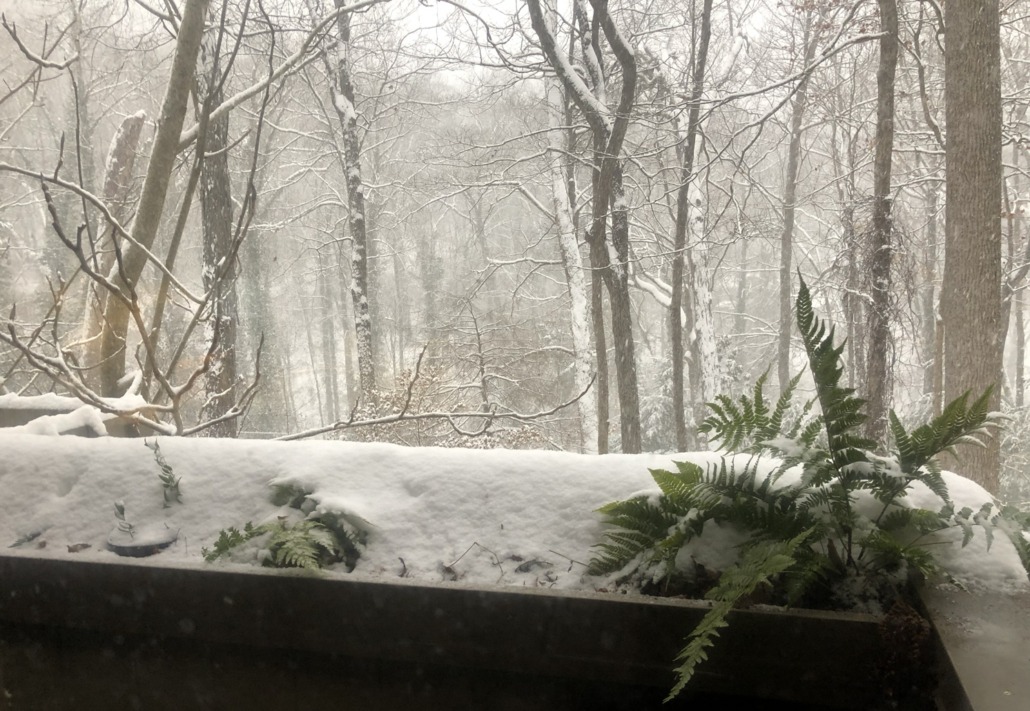
A blanketing snow means we see a lot more birds come to the balcony feeders that we only mostly hear much of the time: big brown thrashers, juncos, redpolls. They join our much less shy, year-round, stalwart towhees, nuthatches, cardinals, titmice, Carolina wren, chickadee, many types of woodpeckers, many types of sparrows and finches.

Words don’t do justice to images:

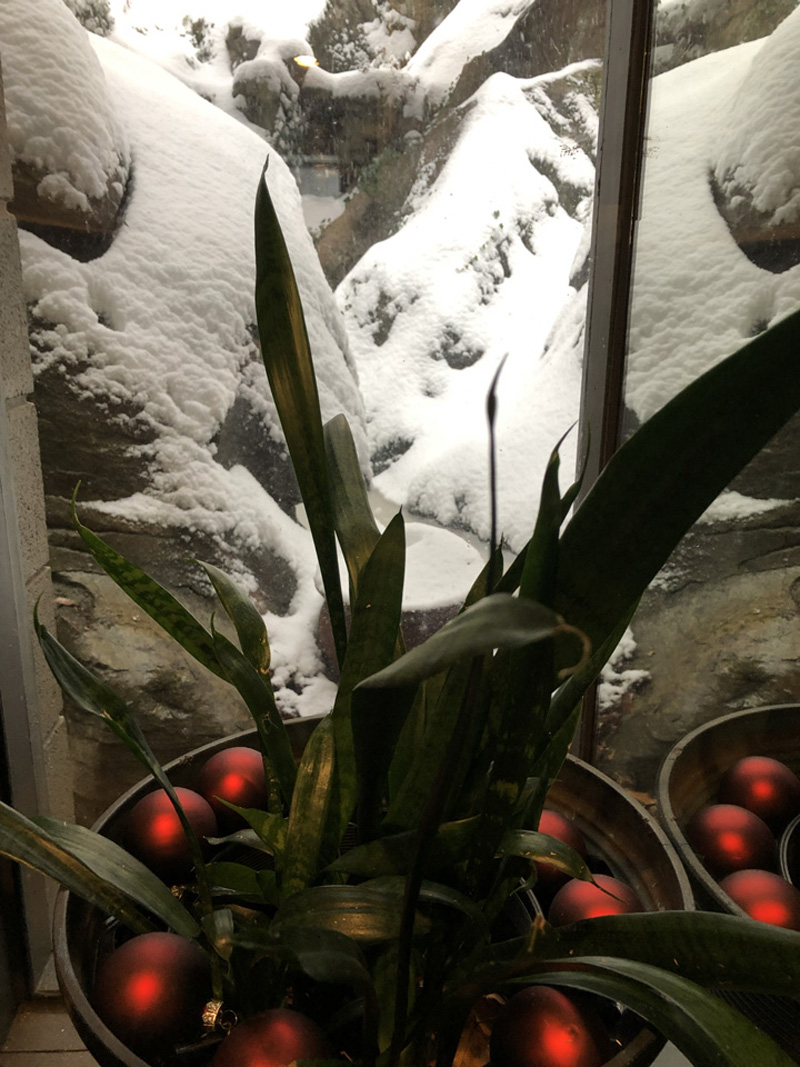
It’s a good time of year to leave a few pieces of Christmas cheer in an entrance hallway to look upon whatever the weather brings to the outdoors.


Dear Family and Friends,

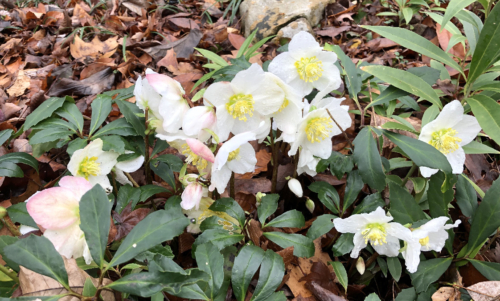
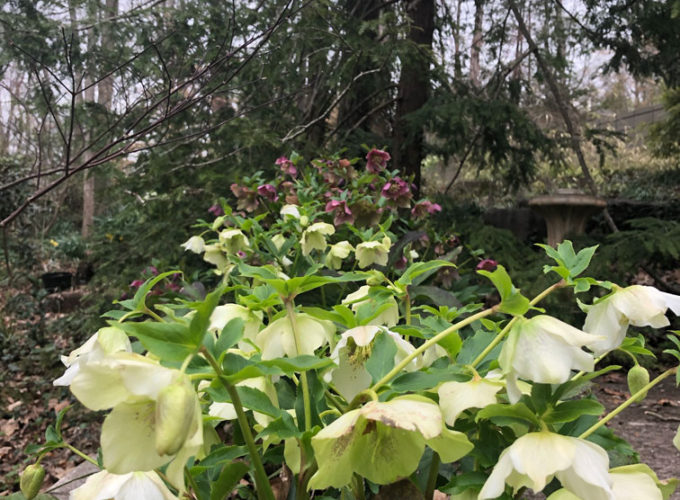
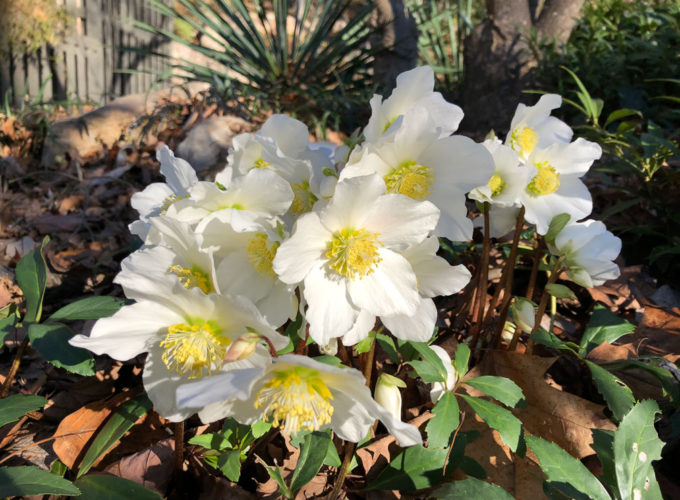
True to its name, the Christmas Rose we brought from Lanntair Farm to Blue Note Garden in 1998 is in full bloom.

It is early morning and all is peaceful and quiet at Blue Note Garden. Well fed and content after their morning routines, Coco the old cat and Gracie the young dog are curled up in their favorite resting places. Occasionally they lift their heads to notice the birds, squirrels, and falling rain outside—remarkable after many weeks of heat and drought.

Advent has been an especially troubled and sad time this year. So many wars and such suffering, of a depth and extent I cannot begin to imagine. So much anxiety about what 2024 will bring. On the home front, several older friends are in hospice or have passed recently. The deaths have come in a cluster as Christmas neared and now their funerals will also occur one after the other in Christmas week leading up to the New Year. One former colleague has entered a home with early Alzheimer’s; her one wish to return to her childhood home for a visit gone unfulfilled in the years of her gradual decline because none in her immediate family could be bothered to go to the trouble—“she wouldn’t remember anyway.”

Gracie eventually bestirs herself and comes over to rest her head near where I am scribbling, occasionally sneaking in a lick on my hand. She must wonder how I could possibly waste so much time on a piece of paper and a pencil. Gracie will go with me to visit my old colleague this afternoon. People in homes I’ve regularly visited this year much prefer to see her rather than me, anyway. Everyone she encounters lights up when they catch sight of her.

Yesterday, Christmas Eve, I took Gracie with me to visit my youngest sister, her husband, and their grown children in for the holidays. It was a beautiful day for an afternoon turn-around trip over and through the mountains. On the way, the wonders of digital radio made it possible for me to listen, live, to Lessons and Carols from King’s College Cambridge with astonishing clarity. But on the return trip, there was silence—not a smidgen of radio transmission could make it past the ancient shoulders and peaks of the Great Smoky Mountains.

Accustomed to living with a cranky cat and a creaky old lady, Gracie is overwhelmed by all the different people she could engage with in Asheville—at one point, running with exhilarating esprit between one, then another, and then yet another, as though she were doing her best to attend to them all at once. I will long remember the sight of her in their good company.

As I watched family members and Gracie, I thought about all the boarders and animals at Lanntair Farm, such a long time ago. There was a lot about the farm that made it seem like the spirit of Christmas was present nearly every day. Perhaps that feeling takes root and grows out of being in a place and among a community focused on profound caring for fellow humans, animals, and the earth. No small task, but essential on a farm or in a garden.

Christmas traditionally manifests itself in many different ways—lights, music, squealing children with presents—but what I loved best was walking to and from the barns at Lanntair Farm, day after day, with our old dogs, Casey and McCoo. Shoveling manure at sunup and sundown put the rest of the day in perspective. Leading the horses in, we’d soon hear the comforting sounds of their feeding and their resting in sheltering byres. We’d catch Kenneth talking to the barn cats while he fed them. On especially magical days, there would be snow:

How fortunate I am to have known—and now remember—that sense of peace and joy. I wish the same for all of you! — Theresa

It’s a good thing that a woodland garden doesn’t really need a gardener for miracles to appear.

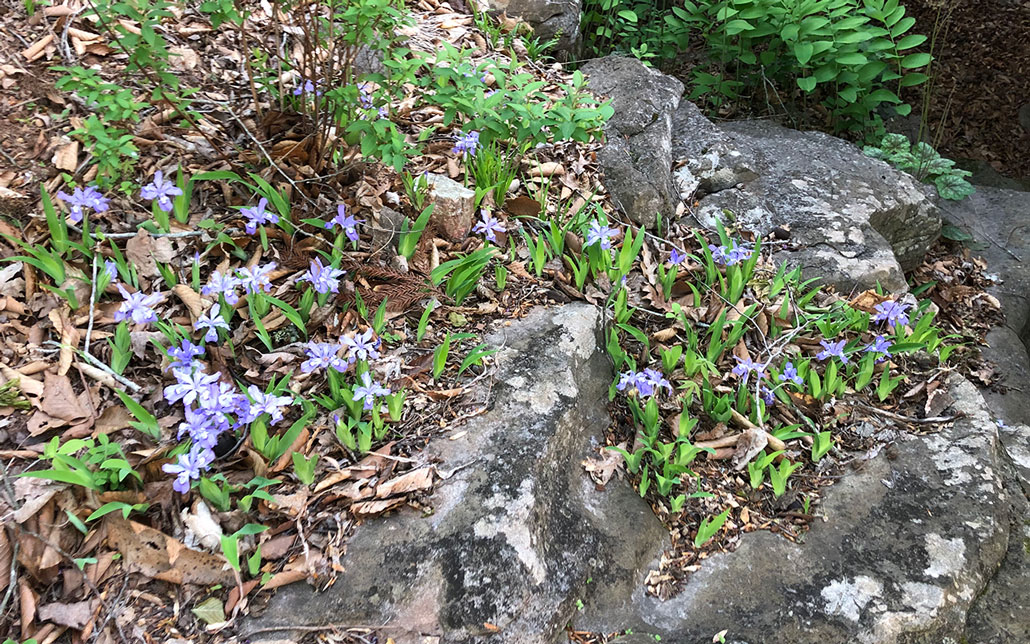
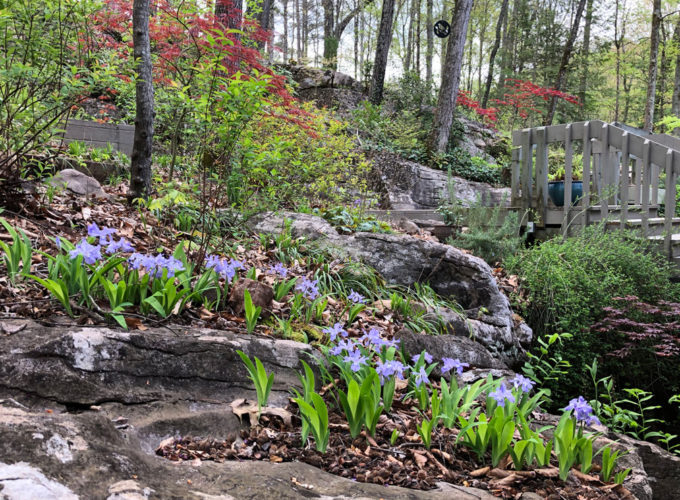
Every year, when we least expect to see it, Iris cristata (dwarf crested iris) makes its spring appearance in ever larger swathes in the woods, often close to boulders, and despite being grilled by heat and drought the previous summer.

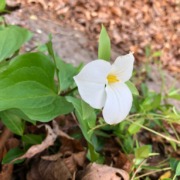
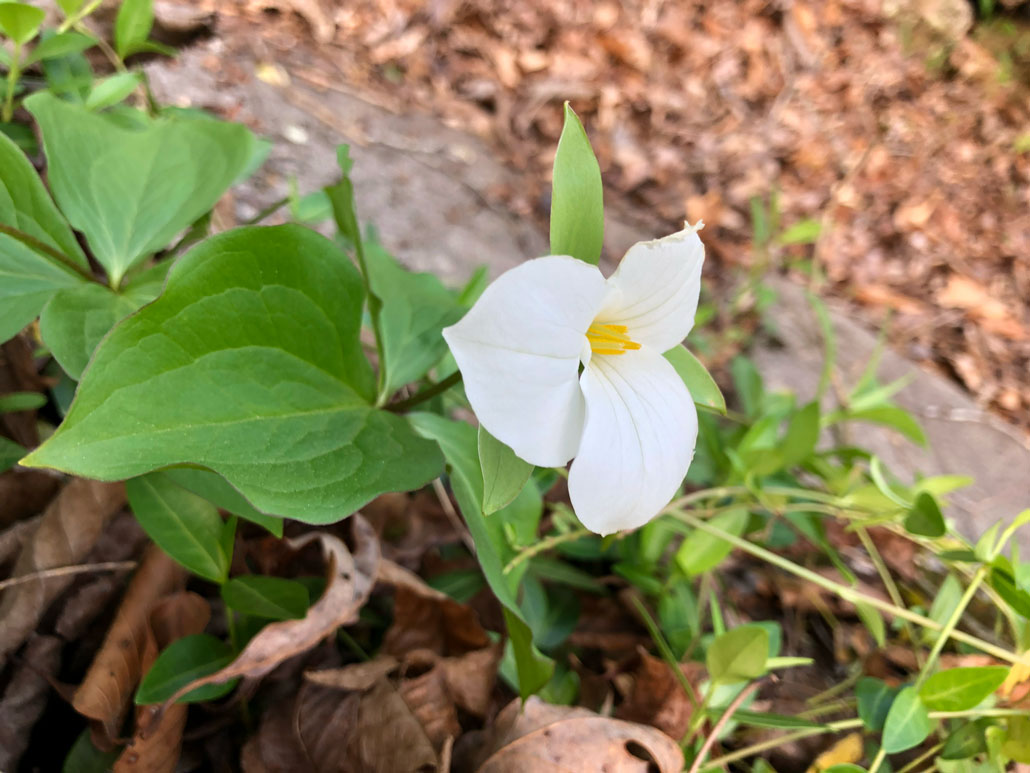
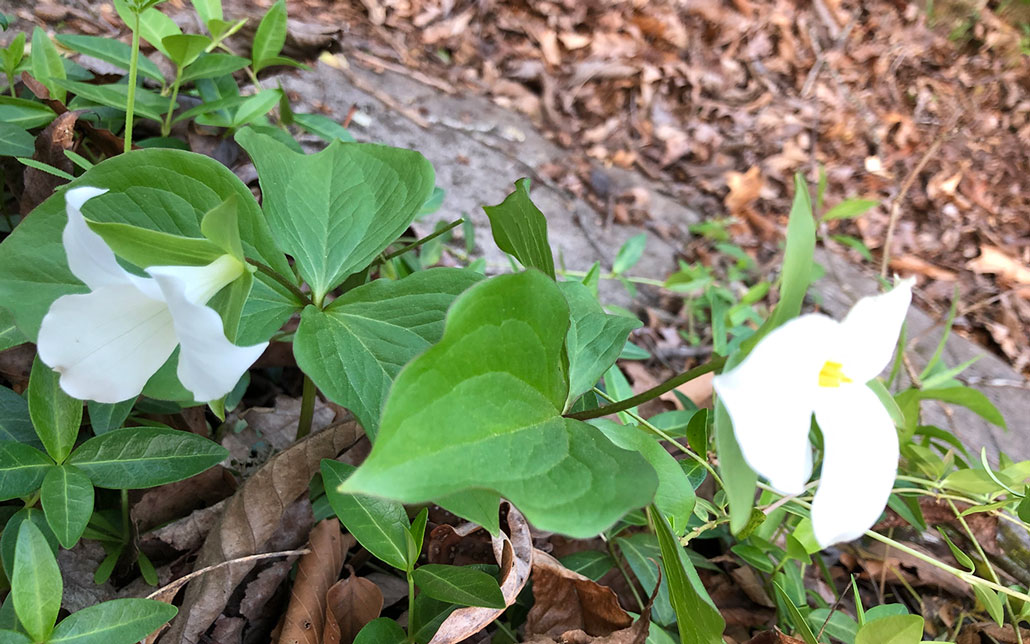
When we first came to Blue Note Garden in 1998, we found exactly one white trillium and it has persisted as a soloist ever since that time.

This year there were finally two white trillium (trillia?) side by side. A 25-year silver anniversary celebration, indeed?!

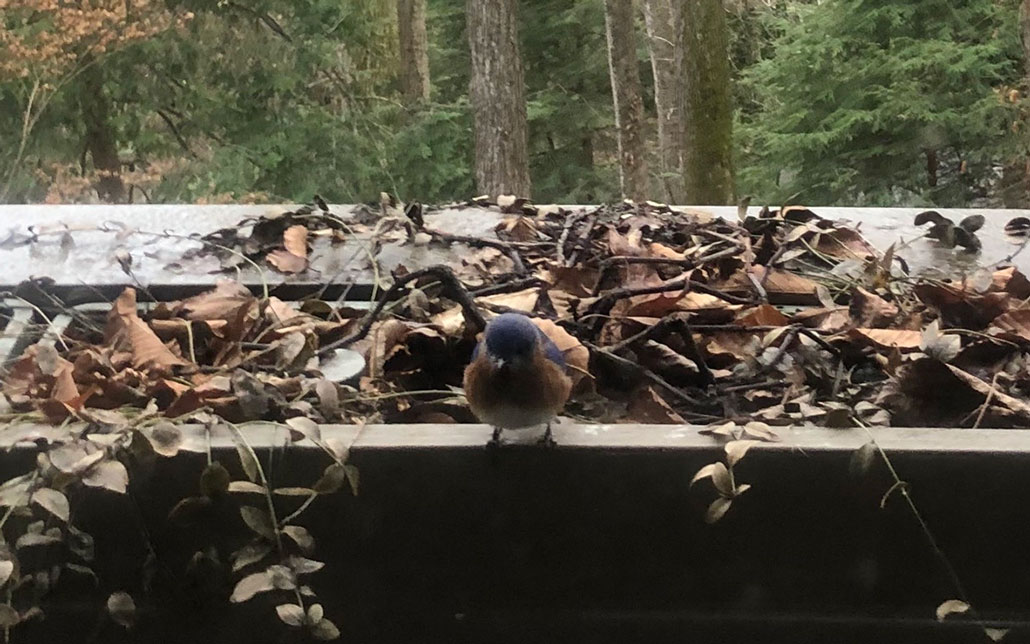
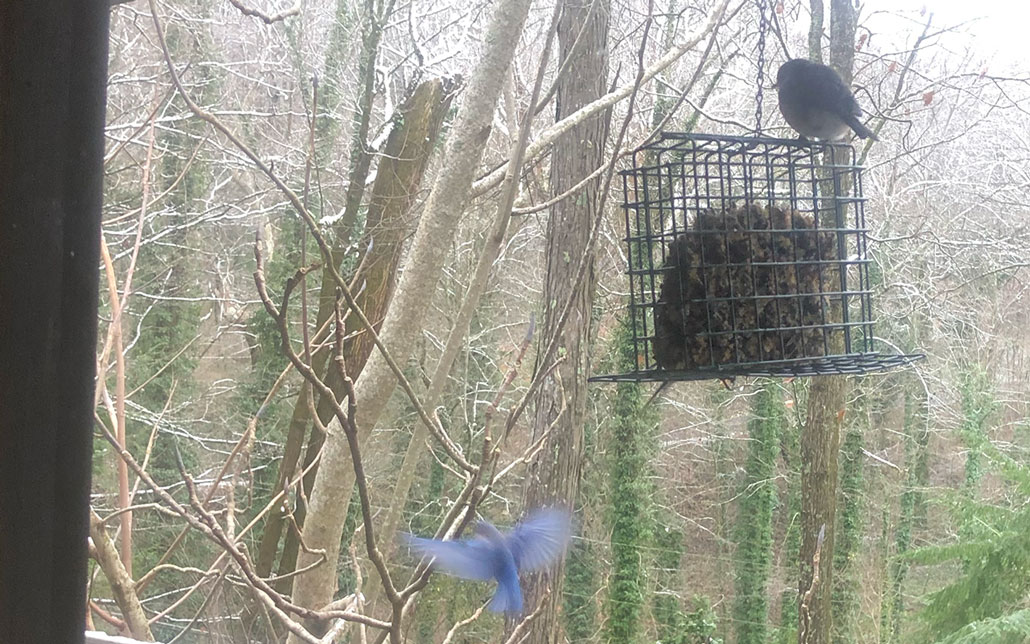
Special mention is due of a bird that is now showing up at many different times of the year—here in a window box below a feeder in January 2023. It is notoriously difficult to photograph; most of my photos look like nothing more than a smear of the characteristic bluebird blue as it flies away:


A Tale of Two Days in 2022 – Friday 11 March and Saturday 12 March

On a beautiful day in March, I took some late afternoon photos of early bloomers at Blue Note Garden. Temperature: 70 degrees Fahrenheit (21 Celsius).

By 2am early Saturday morning a winter “bomb” cyclone (bombogenesis) came through with very cold winds and dumped 5 inches of snow on a lot of trees and shrubs already in bloom. Temperature: 20 degrees Fahrenheit (-7 Celsius).

Lots of events were cancelled on Saturday and Sunday—including Knoxville’s St. Patrick’s parade on Gay Street downtown. But I was able to get to a church by 11am and play two Ukrainian compositions and the Ukranian State Anthem at a Sunday service.

And today, Monday 14 March, we are back to a high of 70 degrees. There was a postcard in the mail wishing me a Happy St. Patrick’s Day from the Duffy and Kerr families and I want to share it with all of you:

DuffyKerr

Sights and Sounds

The sounds of Blue Note Garden are decidedly on the quiet side except for when the birds get carried away singing, or the forlorn howling of trains rumbles through across the river, or the wind stirs the two sets of wind chimes and they play a duet. In late winter, owls begin to call and continue for months as they mate and then track owlets—their nest and roost is in full view of the house’s living room windows and a mere 40 feet away.

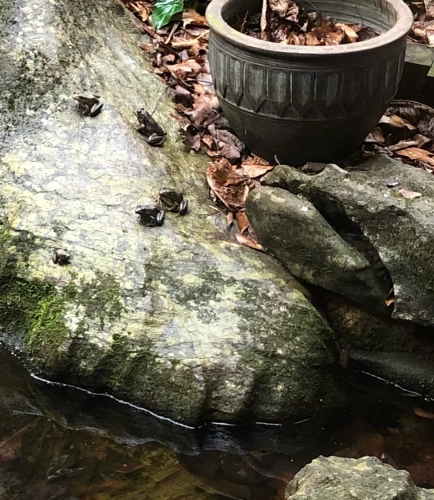
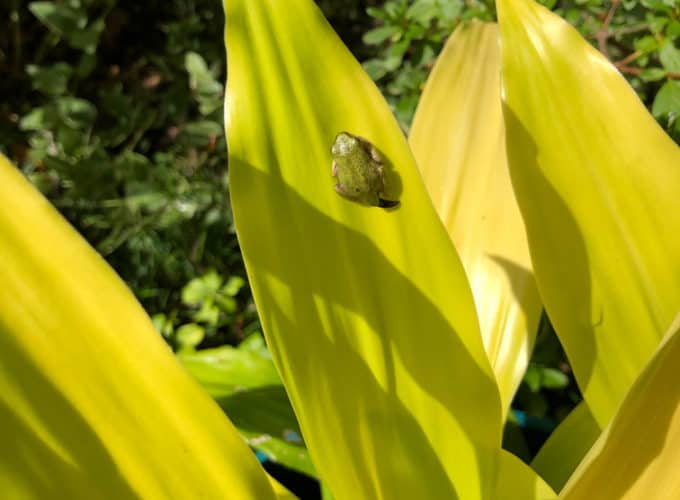
In summer, the Orchestra of Frogs starts-up—from tiny peepers to bull frogs. The peepers can barely be seen they are so small and in shades of green that match whatever they’ve landed on, but they can certainly crank up the volume at will. In fall, nature is assaulted by humans with industrial-size leaf blowers, determined to remove all leaves, laying waste to what should be valued as bounty.

The Beach House

I hear that a shared family beach house can become a battleground when too many relatives all show up at once.

Well, you haven’t lived until you’ve watched a battle between two squirrels and two barred owls for possession of a bole hole in one particular beech tree. The ongoing struggle is the wildlife highlight of the many grim and gray days of March here at Blue Note Garden.

Now, there are dozens of such holes in our many large trees but, for some reason, this is the piece of real estate that these four creatures want. Every evening as dusk comes on the four engage, with each pair using its strategic strengths in concert to attack and evade maneuvers. The squirrels can jump and run both horizontally and vertically down and up trunks and through a maze of branches. The owls can swoop in,  but their wingspan is so wide that twigs can get in their way.

Owlets Away

How good is it that an owlet—perhaps even two or more owlets at a time—can be brought up in a devoted two-parent family, year after year? To paraphrase what author L. M. Montgomery had Anne of Green Gables declare: “I’m so glad I live in a world that has Octobers.” I feel fortunate to live in a world where owlets can grow up with two barred-owl parents working around the clock to respond to their every need for months on end. For years now, I think I’ve sent news alerts out to most of you about the owls who regularly nest winter-through-spring in one of our towering beech trees and I’ve also sent a few photos I’ve been able to furtively take of them. (Ma Owl is, in particular, a force to be reckoned with.)

Over this past weekend there seemed to be a lot of chatter from parents to owlets and whining in response from owlets to parents—it would appear that the parents are anxious for schooling in flying and hunting to commence in earnest and 24/7 meal deliveries to begin to decline. Yesterday I finally got to actually see one owlet, rather than just hear him, when he made the momentous climb from deep within the nest cavity to the open threshold of its high entrance. There he mostly preened and fluttered his wings from time to time, taking in the sights. The training wheels really went on this afternoon when he hopped-off and glided from his 30-foot high perch to another small branch in a young but tall maple close by.
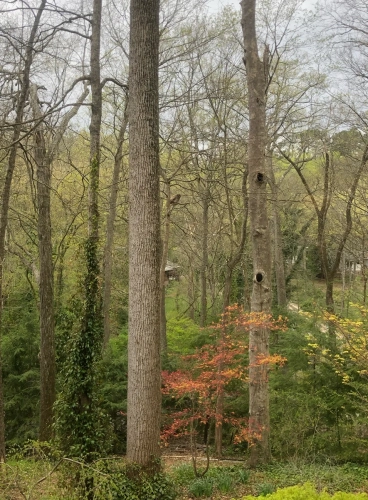
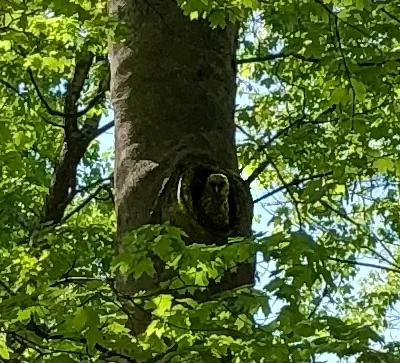
When I went to do errands in late afternoon, the two parent owls were stationed within 25 feet of the owlet in two different directions except for times when they took turns going over to the exceedingly small branch the owlet had chosen to land on and where the much bigger parents had no choice but to crowd-in to do some grooming—each parent looking badly inconvenienced and awkwardly balanced. I’ve read that the baby owls have heads that are much heavier than the rest of their body, so it is often the case that they will try to rest their head on something, anything, close at hand. (See attached photo of what may be a second, smaller owlet resting its head on the open nest ledge, looking for any sign of its fledging nest-mate.) As soon as a parent departed from the branch, this little one promptly flopped flat-out forward on its front to rest head and body along the full length of the short branch. All tuckered out, indeed!

Mind you, this small, if rapidly growing-up, creature has been submerged in a bole where it could not see out for months. It has listened to all kinds of fearsome sounds, including heavy rains and high winds. All of its meals have been dumped into its nest day in and day out. And then it turns out that the very first thing its parents require of it outside the nest is that it should step off the edge of its longtime home and trust that it will be able to arrive somewhere else equally high and nearby. (If I had a ton of money, I’d install a patio area in front of the bole where there could be a place to rest in between fledging flights; on the other hand, the portico platform would make it easier for predators to pay a visit, such as the big red-tailed hawk that had lurked about earlier in the season.) The Driver’s Ed phase of pilot-training  seems to have arrived this evening, with the owlet back in its nest and the parents off a little ways hunting.

An old friend in our neighborhood walks long distances every day while she can, beset with early-onset Alzheimer’s; the interminable walking helps to stave-off anxiety over what she knows to be a terminal condition. She walked down the long driveway into Blue Note Garden yesterday to seek my help with a problem she was having with accessing her usual classical music station through her phone and ear buds. But then she told me she didn’t care if it worked because she was just then hearing more birds and other natural sounds than she heard anywhere else—perhaps she should just listen and pay more attention. “Theresa, why is it so alive here?” Her question—that a person with a brain shutting down could still perceive the difference in the sounds of life renewing—brought me near to tears. I asked her to remain very quiet as I took her over to see the parent owls on sentry duty near their young nestlings, all of them bobbing around on a couple of leafy branches way high up in an old growth tree. And then she started to cry, too, as she watched them.

Many of you have probably been urged by me to read This is Happiness (2019) by Niall Williams at one time or another in the last couple of years. Were my husband alive, my copy would have been in a stack by his side of the bed where I put books I thought he’d particularly like. I still pile books there that are most meaningful; the sight of that tower of books has gone from being a source of pain to a cause of succor.

I am often care-worn in my mind about the Earth we are leaving to future generations. As I observe moments in nature here at Blue Note Garden, my fervent hope that a new generation of barred owls will successfully launch into our wild and worrisome world seems a very small concern in the bigger picture of impending catastrophe. This afternoon, as I observed both parent owls closely supervising their offspring and fuzzy owlets playfully taking the plunge into their new lives, I realized that they know what they are doing even if most humans do not. I will miss them but they do not need me to worry about them. My heart fills and I whisper to myself that getting to see them do what they do naturally—“This is happiness!”
Very soon, sightings of adults and young will be few and far between with all easily obscured by our forest’s dense summer foliage. I will still hear their calls from time to time and occasionally one will fly down close or roost on a lower branch and stare directly at me. There is also the promise—not the certainty, but the possibility—that they will be back next year. How good will that be!

I have all my life been considering distant effects and always sacrificing immediate success and applause to that of the future.

Frederick Law Olmsted

The best thing to happen to Blue Note Garden this year did not come about in the garden but in the publishing world with the publication of three seminal works of “lessons learned” by longtime, accomplished gardeners. After many years of artistry and practice, all of them have become more naturalists than cultivators, for whom ecology and stewardship have become the primal force. Instead of merely immediate effect, they advocate caretaking of landscapes that is far more attentive and wholistic.

Nature’s Best Hope: A New Approach to Conservation That Starts in Your Yard by Douglas W. Tallamy, a researcher at one of my favorite public gardens, Mt. Cuba Center in Delaware, who routinely signs his books “Garden like your life depends on it!”

Uprooted: A Gardener Reflects on Beginning Again by Page Dickey

Windcliff: A Story of People, Plants and Gardens by Daniel J. Hinkley

These three recent books have helped me to more clearly understand what I’ve been reaching for here at Blue Note Garden for over two decades. They are the mature thinking of truly great gardeners and I am delighted to live long enough to read them. The dramatic topography of massive rocks and statuesque trees here at Blue Note Garden has long won out over my tendency to fall in love with a plant for its color, its fragrance, its beauty—what I have come to think of as a “doggie in the window” sensibility. Instead, within the limits of my funds, this land has taught me many hard truths and made me think in much larger and longer-term ways about both the ecology of this woodland space and the good of the earth and its creatures.

Would that our entire peninsula of Lakemoor Hills could be viewed as a treasured native landscape and not merely the “driveway dressing” for individual plots. I won’t live to see that distant future but I can do my part now. Every day I go out to find and ponder wonders I never saw or conceived before—that are or could be. Never have I needed nature more than in this year of pandemic and isolation.

I’ve recently had the occasion to overhear conversations where home buyers talk about finding their “forever home” and I have to marvel:  There is no such thing. As much as I think about my home and garden as something I hope will persist and thrive very far into the future—and I act every day to make that possible—that is not in my power as an individual for all time; I will die and others will take my place. Any number of events may happen and change become inevitable. When one loses a spouse, one learns that perforce; he could only be my “forever husband” because I had lost him to death. By a certain age, all of our best friends—our forever friends—are the ones who are dead because they can no longer change from their state of complete perfection. There is great comfort in that instead of the despair that one might expect—while everything else does change and new losses pile up.

Be that as it may. I am sure no one else wants to hear my philosophical rantings so I will change course and move on.

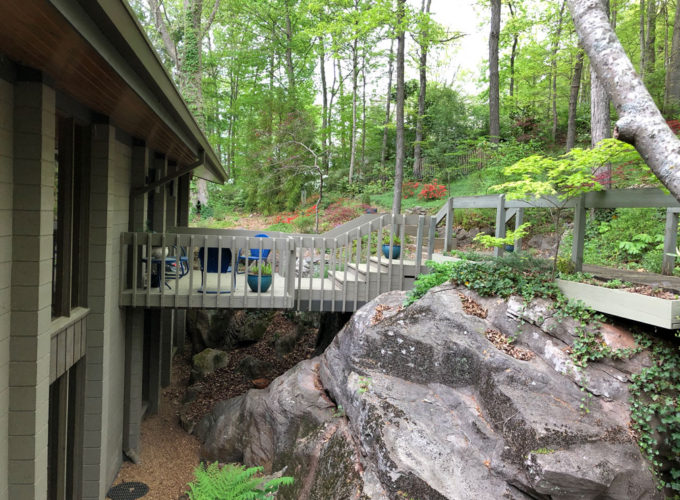
There are days I try to articulate why Blue Note Garden has such a hold on my heart. I think the word “organic” begins to convey why I am deeply charmed by the house and its setting. It is exceptional for a modern structure to appear so at home on its natural site. In my view, too many modern homes are certainly slick and stylish but they can also be sterile for all their spit and polish. They don’t have a soul rooted in place, wrapped ‘round by a living landscape that can be surveyed at almost every angle from within the home at its center. Every day is alive with the sounds of birds and the change of seasons.

At the risk of sounding too “higher order,” I think of how much time and trial-and-error it has taken to have an inkling of what this place calls for. Every season I see new angles and sights and I try to respond to those. And then I stand aside and nature does the rest, as it knows best.

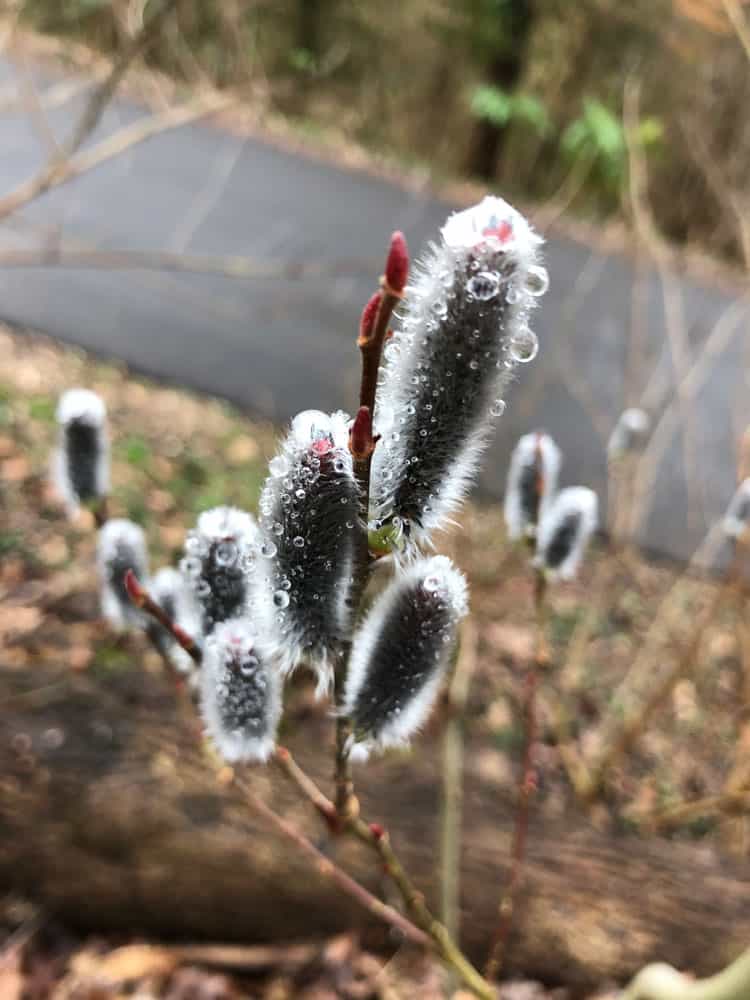
A few photos from March 2021: edgeworthia, cornelian cherry dogwood, pussy willow.

Dear Friends,

Christmas Greetings to you all on this sunny but very cold morning (18 degrees Fahrenheit—about minus 10 Celsius) in the eastern hills of  Tennessee.  There is a 4-inch (about 10-cm) powder-deep snowfall on the ground that came down, quickly but gently, on the afternoon of Christmas Eve. We’ve not seen much snow in the last few years; most comes, if it comes at all, in January and February and then usually disappears pretty quickly, but this one has been here to stay for days.
Of course, as we’ve all experienced in this year of difficult times amid moments of joy and gratitude, there had to be a bit of trouble and it came later on the evening of Christmas Eve with a power outage that lasted 12 hours while the temperature plummeted. I never cease to be grateful for running water, our gas fireplaces, water heaters and stoves! And it all makes me remember our years of hauling heated water to horses at Lanntair Farm during some record years for cold and snow.

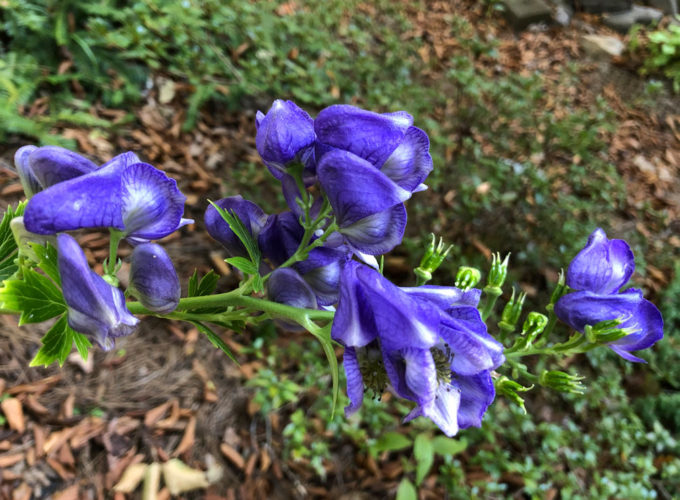
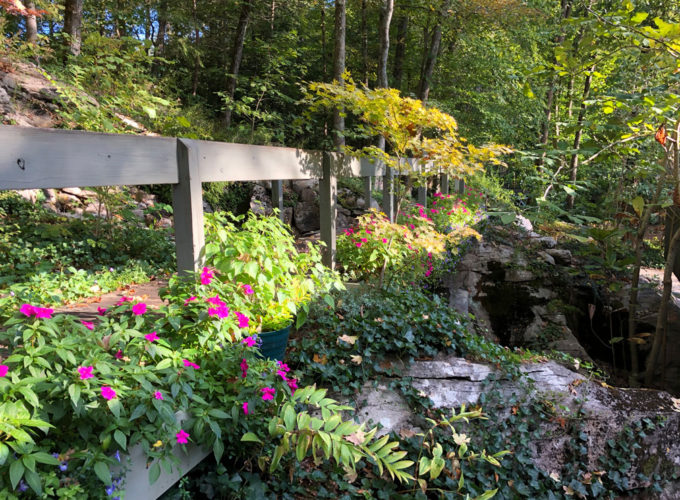
I’ve been in isolation at Blue Note Garden for ten months—six of those recovering from breast cancer surgery and chemotherapy—with growing appreciation for the world of nature that surrounds me here:
For several weeks, we had 60 goats—yes, that’s right, sixty—munching their way through the property across the lower road from us. We’ve had so much rain in the last couple of years that undergrowth on forest land that hasn’t been regularly maintained can become almost impenetrable—except for goats. The sounds of their work and play reminded me of when we first came to Knoxville and lived across the street from the playground of an elementary school—adorable to have nearby.
A couple of weeks ago, a large flock of cedar waxwings came through from the north and ate every single berry from all of my (my?!) holly trees and bushes before winging their way south. They left not a single branch for Christmas decorations. I was reduced to cutting down a couple of nandinas remaining here—which are invasive and warrant removal anyway. So the birds did me a favor in prompting me to get that done.
Unfortunately, a large robin collided with one of our living room windows several days ago. I put him in a cardboard box, hoping he was merely dazed, but he did not make it. It made me resolve to get around to putting together a bird mobile kit I purchased last year from Germany, of a large Merlin hawk to hang and ward-off birds from one particular north-facing corner where birds see-through to another series of windows and assume they can fly-on-through. If I build another house after selling Blue Note Garden I will be sure to install bird-safe glass—yes, there is such a thing and humans can’t tell the difference, but the birds can.
This morning a large, handsome red fox was walking around outside the house as though he owned the place. He just about does, because there have been far fewer human guests here at Blue Note Garden during this year’s Christmastime.
Still, I am very glad that most of you are not traveling unless quarantined, tested, or vaccinated. I think of you all in your own homes and it gives me great comfort to know that you are able to shelter, work and keep reasonably well. Please stay well and stay safe!
Much love to all,
Theresa

I don’t remember growing older
When did they?
When did he grow to be so tall?
Wasn’t it yesterday
When they were small?
Sunrise, sunset
Sunrise, sunset
Swiftly flow the days
Seedlings turn overnight to sunflowers
Blossoming even as we gaze
Sunrise, sunset
Sunrise, sunset
Swiftly fly the years
One season following another
Laden with happiness and tears

Paraphrased from Fiddler on the Roof

COVID-19 has wreaked havoc on humans throughout the world, but Blue Note Garden has fared very well in 2020, with a spectacular, long spring and steady rain. That was an especially good thing because I had to mostly ignore the gardens from May through August due to health issues. As I tried to regain weight and strength following surgery and chemo, the gardens proved, hands down, the best medicine and therapy. 

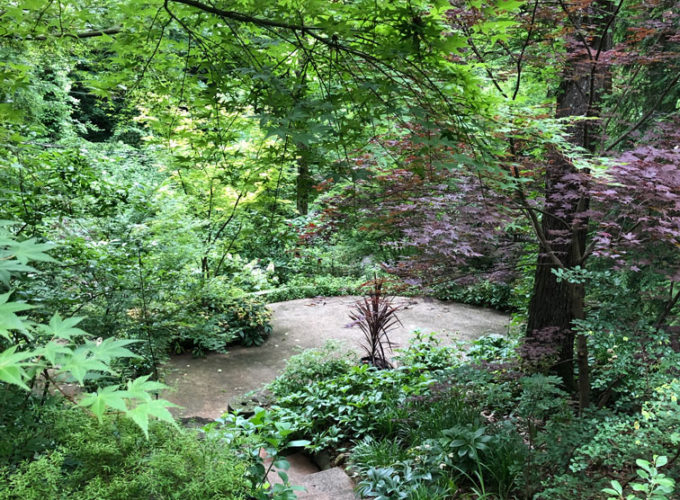
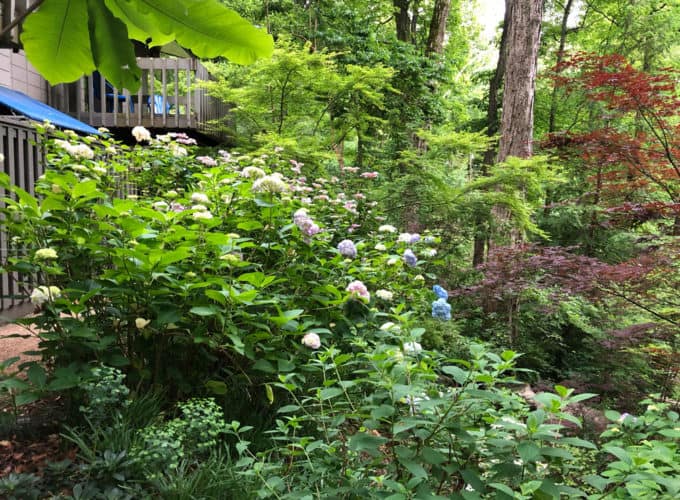
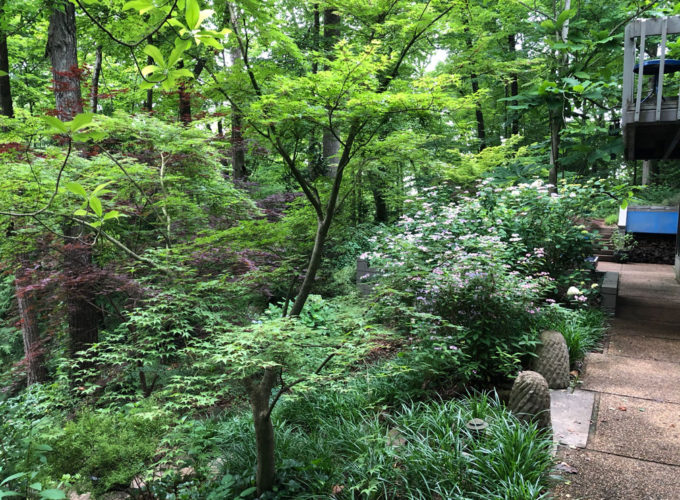
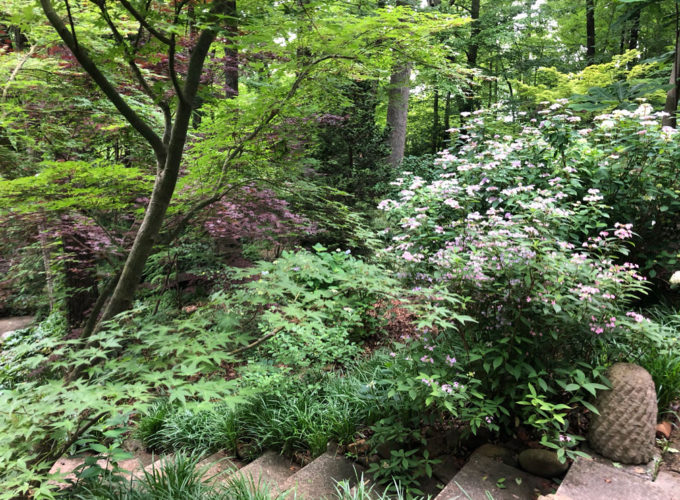
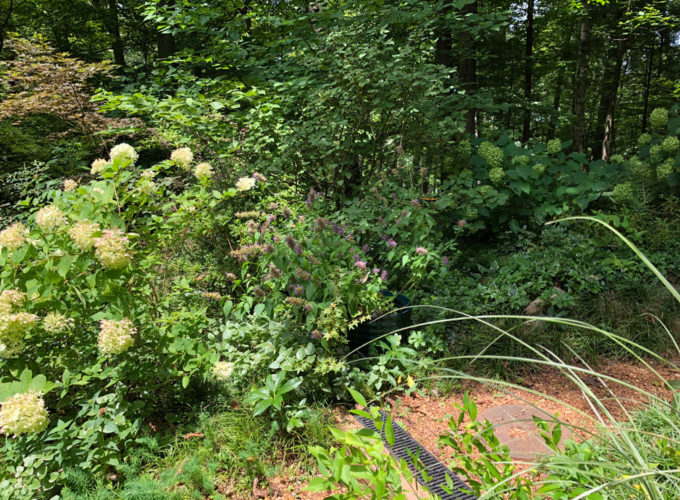
In the midst of this fine summer, I look out our home’s many floor-to-ceiling windows and I am astounded by all the thriving, mature plantings that have settled comfortably into the landscape. “When did they grow to be so tall?” Most remarkably, with only a very few, truly hot days, even spring wildflowers such as Solomon’s Seal and ornamental trees such as the flourishing, weeping katsura are retaining both their green color and their leaves much longer than usual, making for many layers of infinite shades of green. Foliage is growing vigorously enough and everywhere that the main tasks are to remove it from obliterating massive rocks and to prune as high as possible so that smaller, newer plants can have access to more sunlight. 
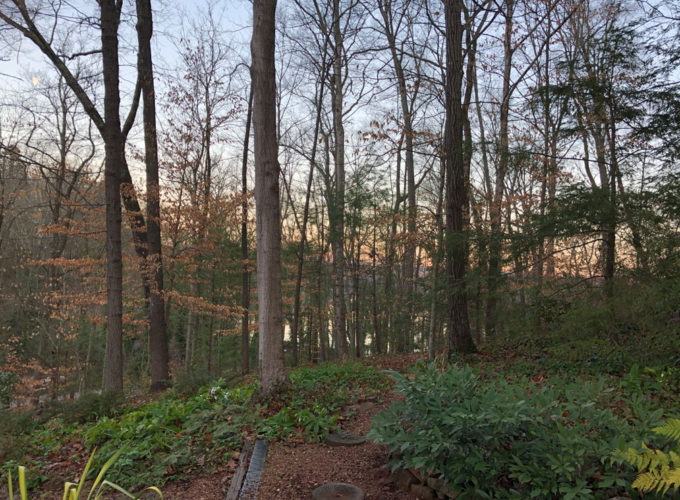
Otherwise, there is hardly anything to do in the garden, really, except that I can never resist fiddling with plenty good enough, trying something different and completing projects. But those are just rationale. When it comes right down to it, I much prefer working in the garden than any other form of physical exercise, although walking and hiking are always a strong draw if I can find the time for those as well. I am privileged and old enough that I don’t worry so much anymore about the day’s agenda, but I let the gardens tell me what to do. I finally have learned the lesson I was given by a good friend and fellow musician many years ago when I complained that I went out for a few minutes and came back into the house hours later having achieved none of what I had intended: “But, Theresa, that is the whole point of a garden—to dither, to be lead astray.” Indeed.